Unified design process
30
designers
24 teams
adopted the process
25
stages of the design workflow
Impact
30
designers
24 teams
adopted the process
25
stages of the design workflow
The Alfa-Bank website design team had grown to around 30 designers across 24 product teams. Processes hadn't scaled with the headcount — every team operated differently, workflows were undocumented, and there was no shared language between designers, product owners, and project managers.
Context
The Alfa-Bank website design team had grown to around 30 designers across 24 product teams. Processes hadn't scaled with the headcount — every team operated differently, workflows were undocumented, and there was no shared language between designers, product owners, and project managers.
Problems identified
No regular planning → constant inefficiency and chaotic work rhythm. Poor quality briefs → wasted time, missed deadlines, rework. Urgent unplanned tasks and shifting priorities → loss of focus, low output quality. Friction with marketing → missed goals, coordination overhead.
My process
Research — studied existing process documentation from other divisions within Alfa-Bank, and analyzed how other companies structure design workflows.
Discovery — conducted individual interviews with designers and product owners across all 24 teams. Mapped current workflows, identified pain points, documented everything in Notion.
Framework design — synthesized findings into a unified process framework in Figma. The core challenge: cover all stages clearly enough for non-designers while remaining practical for designers who live in it daily.
Qualitative validation — ran structured sessions with 3–4 participants each, mixing designers, PMs, and POs. Asked them to walk through the framework and map a real task onto it.
Stakeholder alignment — presented to Head of Project Management, then defended in front of all product owners and the CPO. Feedback collected via Google Sheets, every comment processed and resolved before final approval.
What we introduced
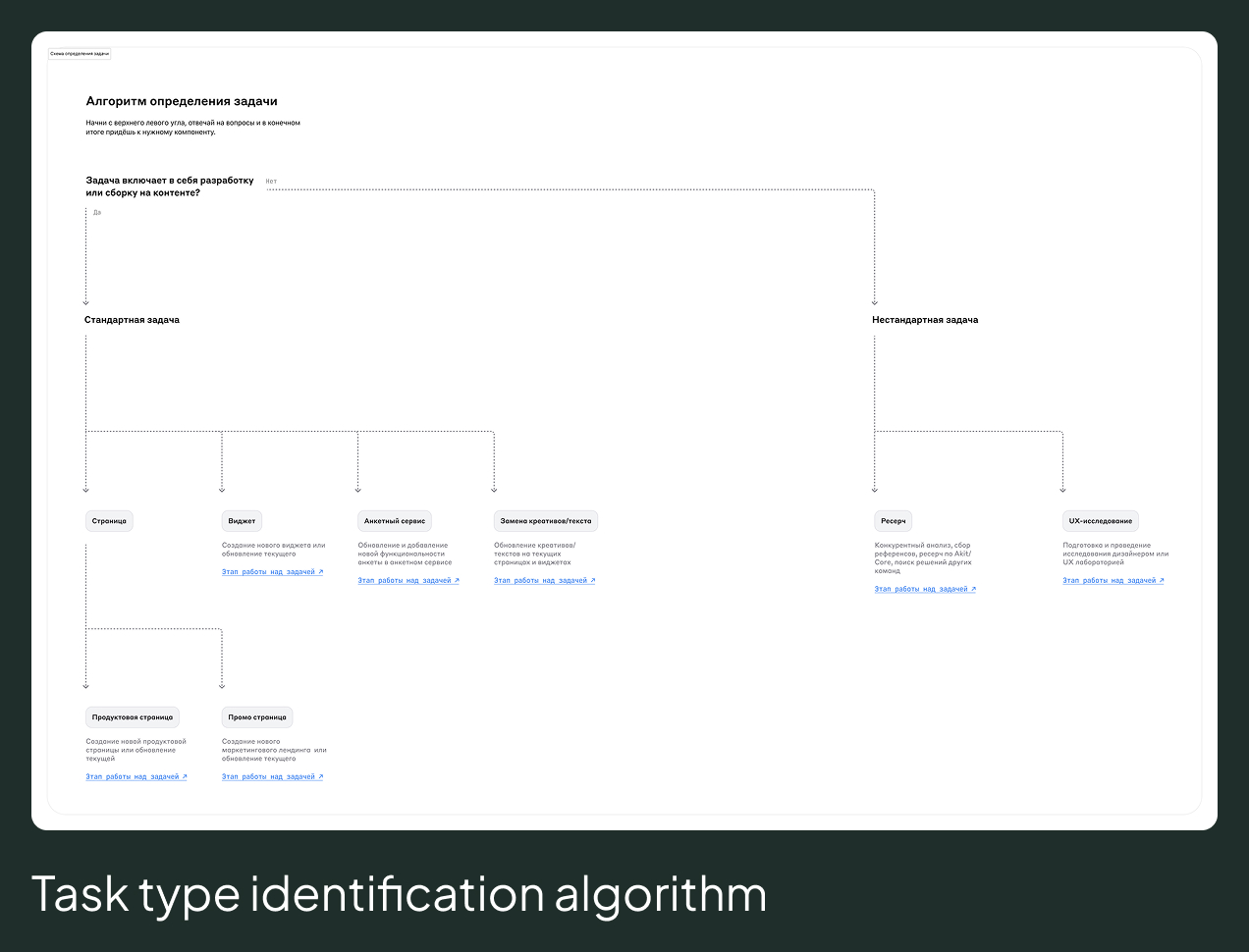
Task type definition table — a reference document helping anyone (designers, PMs, POs) quickly identify which category a task falls into before it enters the design workflow.
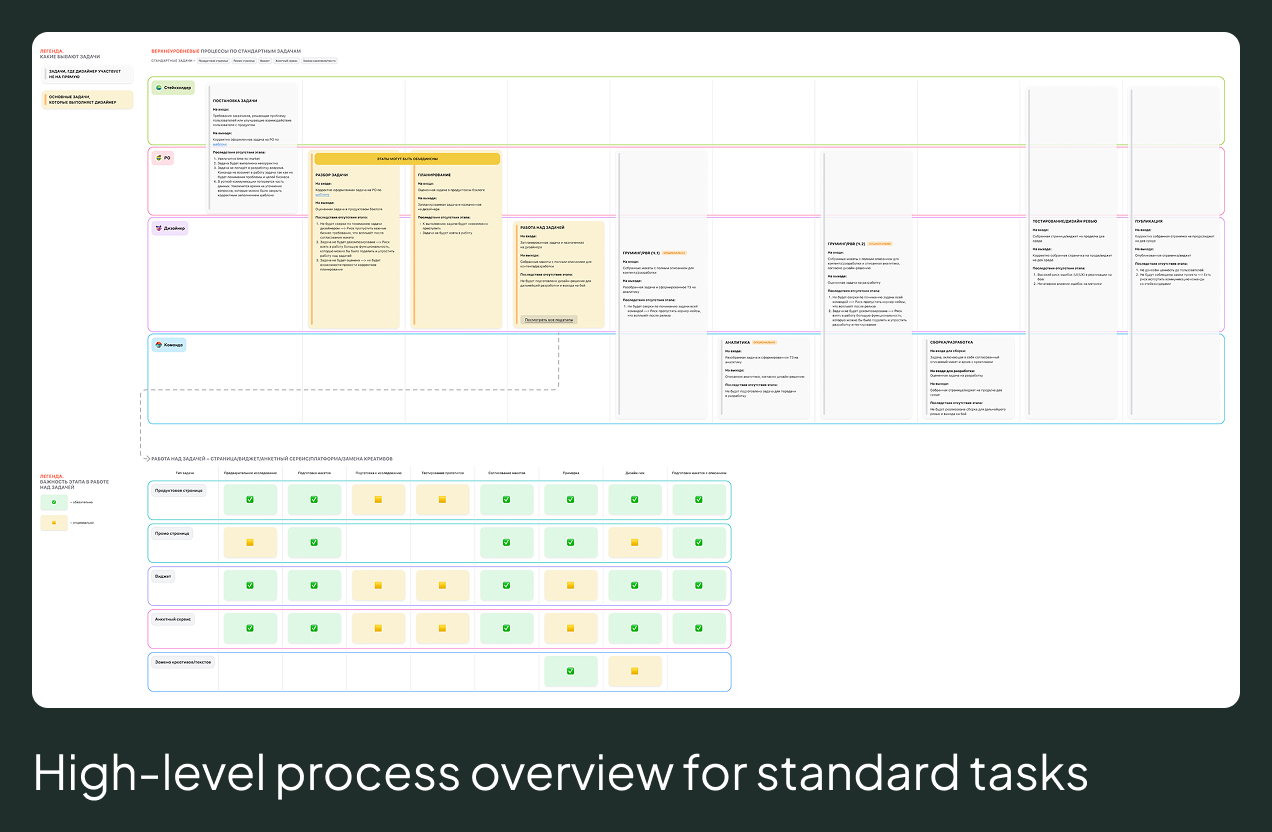
High-level process tables — two versions covering standard and non-standard task types, giving teams a clear top-level view of how design work moves from brief to delivery.
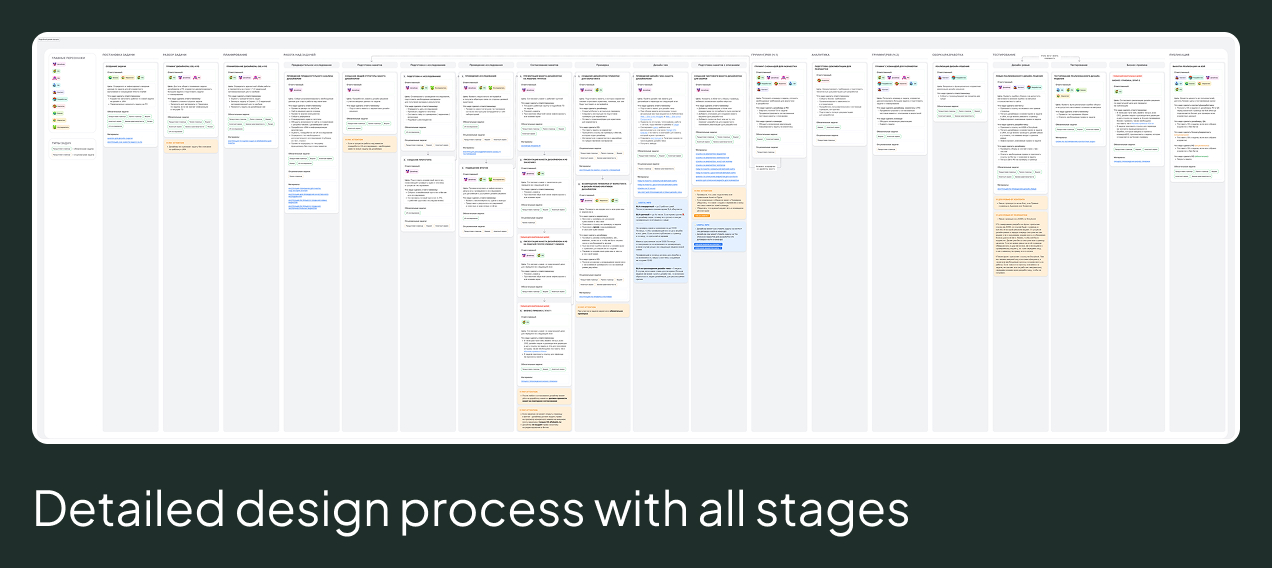
Detailed stage-by-stage table — a comprehensive map of 25 stages in a task's lifecycle, showing exactly where and how the designer participates at each step — directly, indirectly, or as a reviewer.
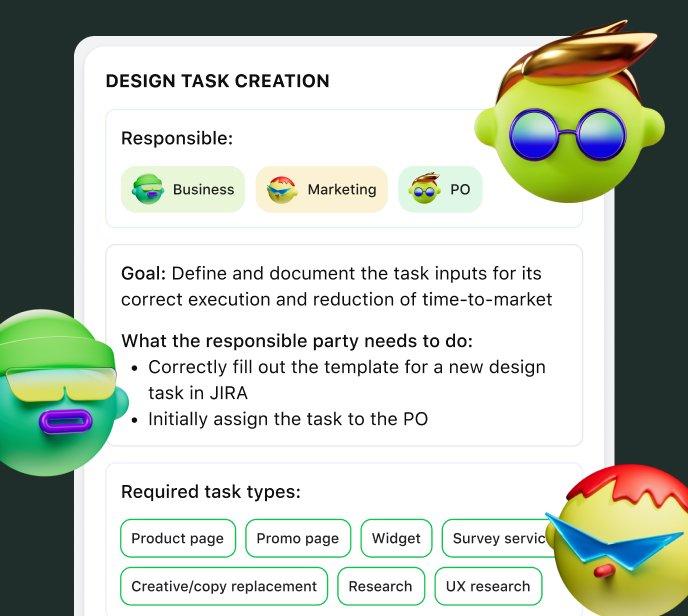
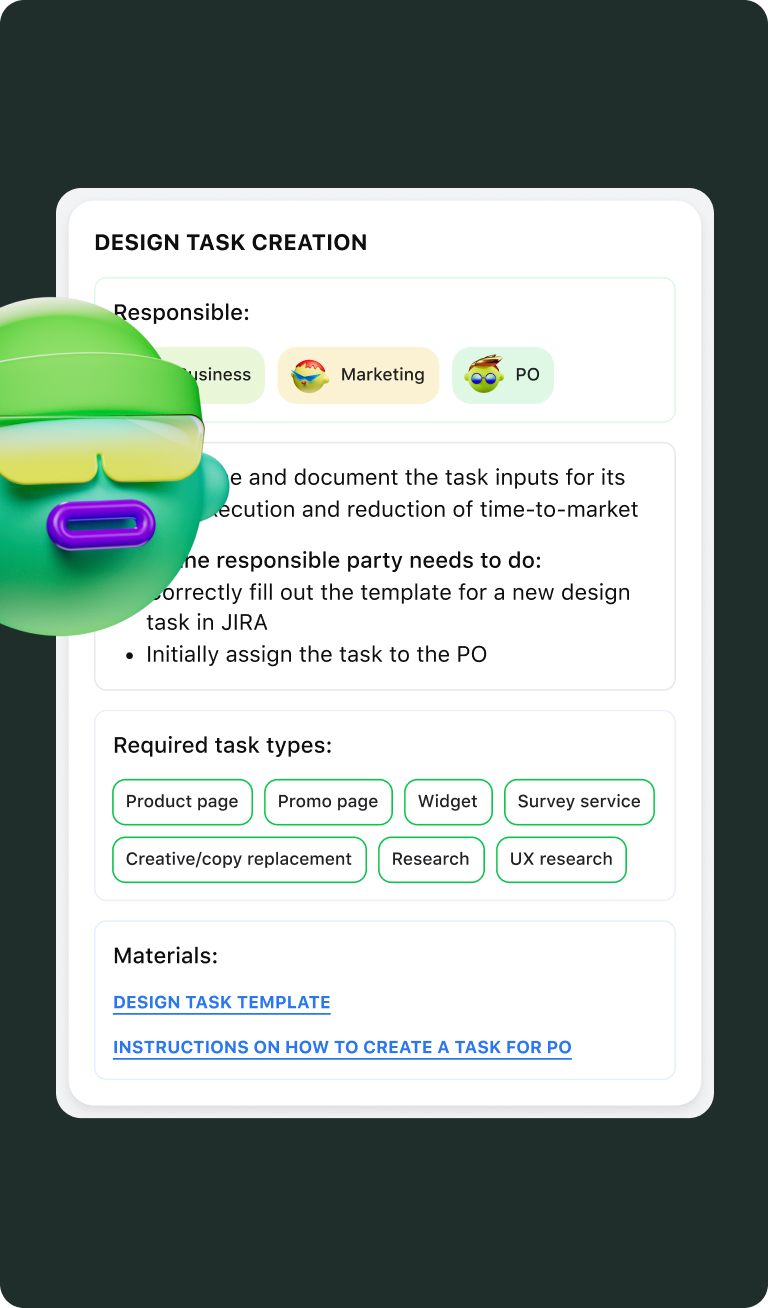
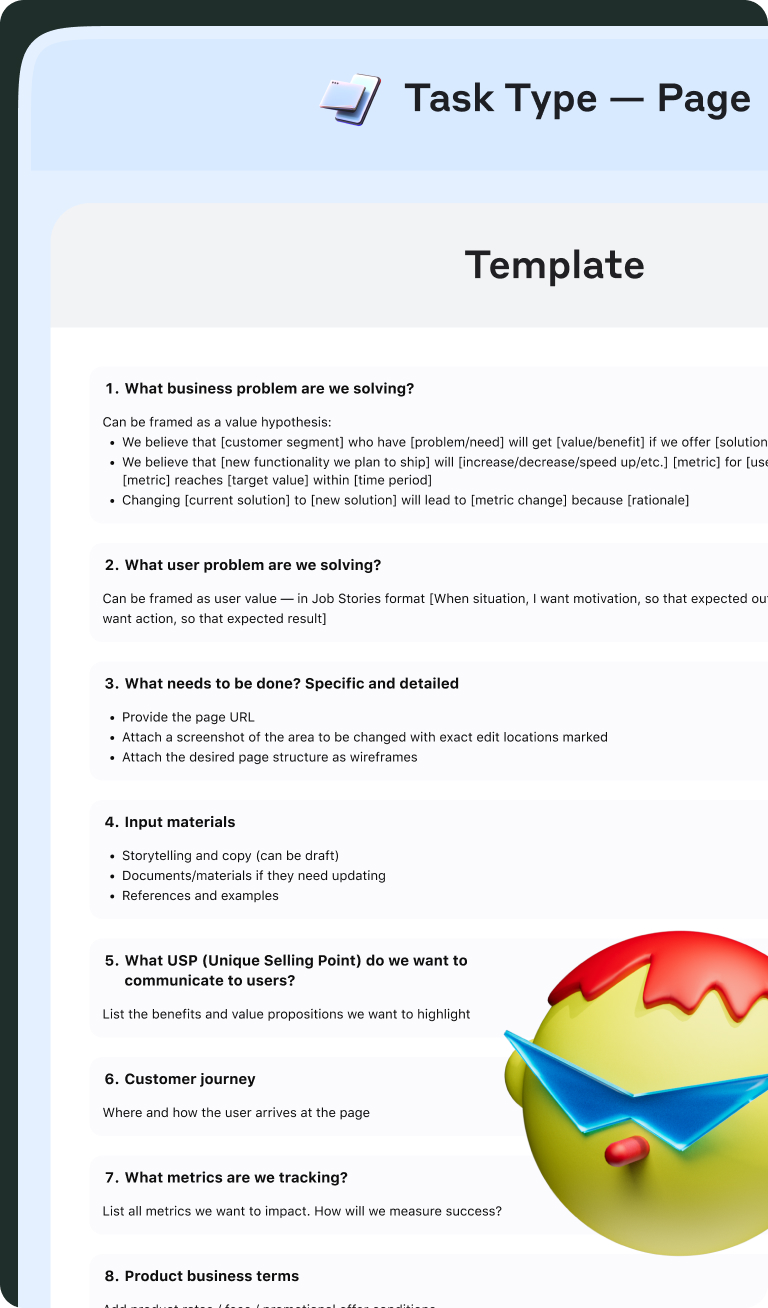
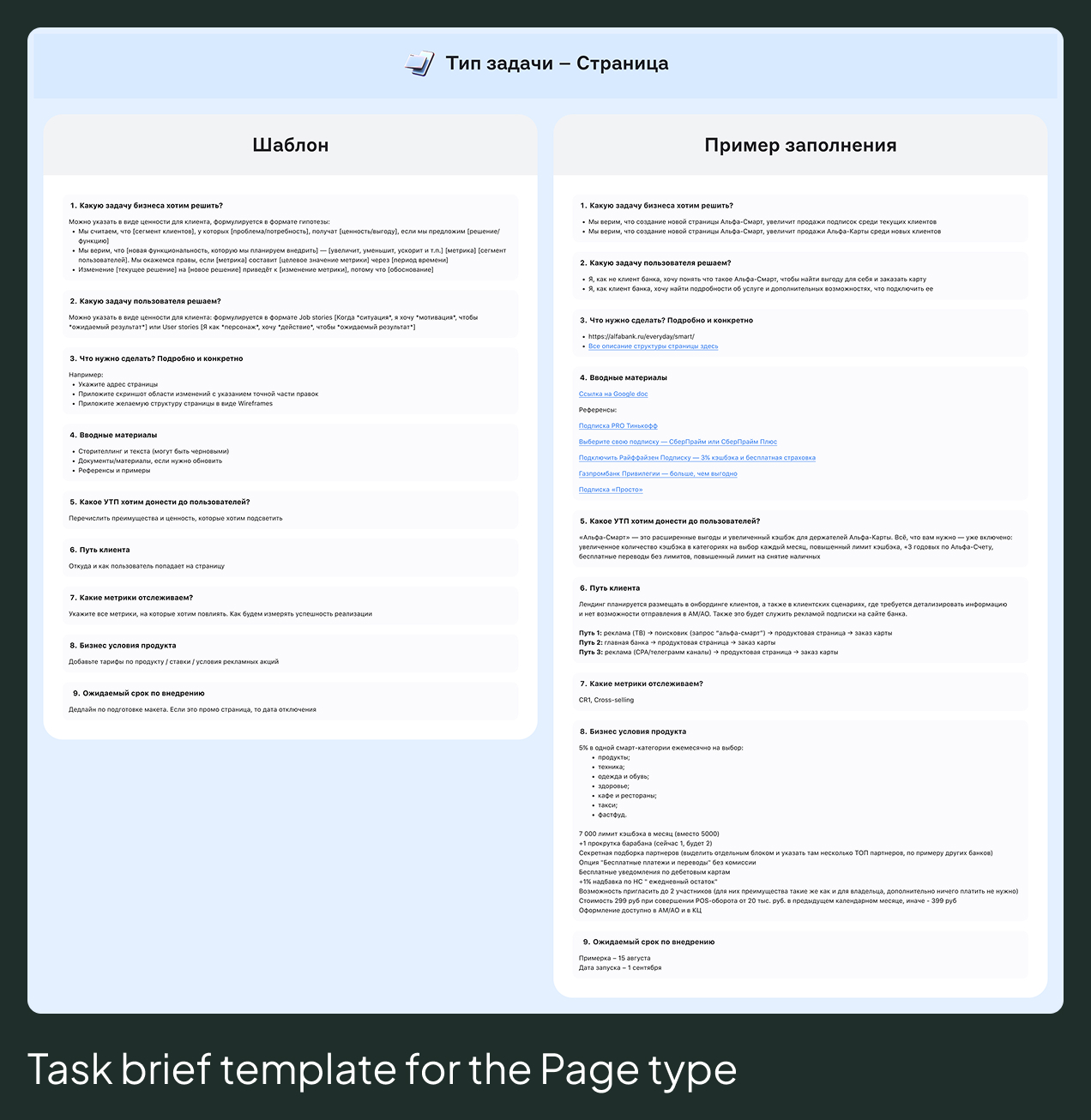
Jira task templates — structured brief templates for every task type used on the website. Templates are synced with Jira as auto-populated stubs, so requestors fill in context before the task reaches a designer. No more empty briefs.
Useful links library — a curated reference hub with everything designers and collaborators need: tools, guides, processes, and contacts.
Marketing-specific process diagram — a dedicated flow diagram created to align with the marketing team on design stages, addressing the specific chaos marketing requests introduced into the workflow.
Process materials
Outcome
Framework adopted across all 24 product teams, 30 designers.
25 stages of the design workflow were mapped and standardized, from kickoff to release
Used as primary onboarding material for new designers.
Reduced unplanned task interruptions.
Active for 6+ months with no major revisions needed.